

Comment-to-Conversion: How Rithm Turns Social Comments into Inquiries
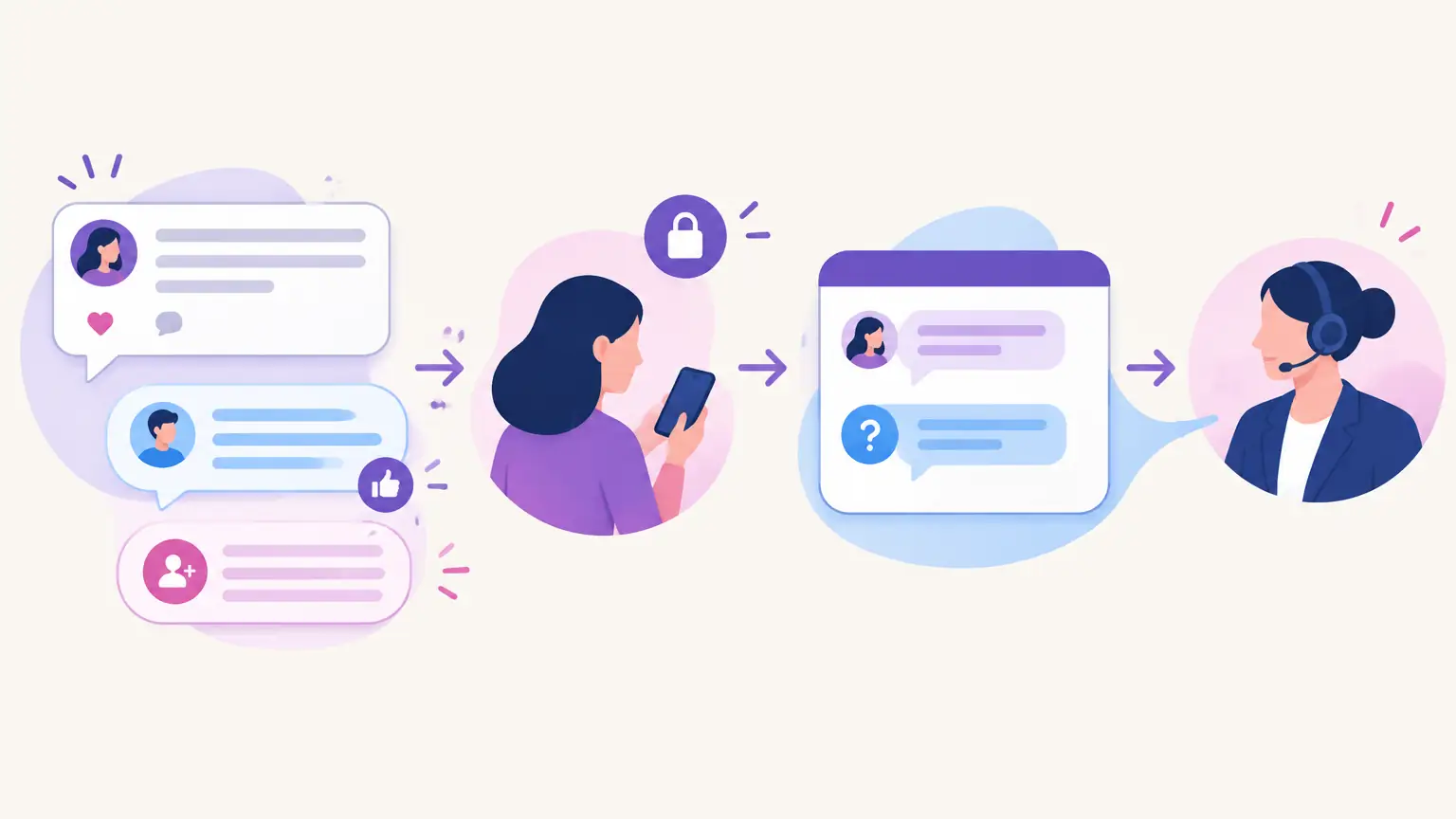
Comment-to-conversion is a planned path from a public social comment to a private, customer-chosen conversation and then to a real inquiry your team can confirm. Rithm designs the public reply wording, the invitation to continue privately, the questions asked next and the human handoff. It does not mean sending unsolicited messages to everyone who comments.
What the service actually covers
Many businesses get questions under their posts and ads, such as "How much?" or "Do you service my area?", and answer them slowly or not at all. A comment-to-conversion workflow gives each common question an approved public reply, an optional private next step the person can choose, and a clear owner on your team. Rithm's comment-to-conversion service builds that structure around the tools you already use.
The four stages
| Stage | What happens | Who approves it |
|---|---|---|
| Public reply | A short, helpful answer that avoids personal details in public | Business owner |
| Invitation | An offer to continue by message, form or call, chosen by the commenter | Business owner |
| Qualification | Two to four questions that help a person respond well | Sales or service lead |
| Handoff | The conversation and context go to a named team member | Assigned owner |
The private step must follow each platform's rules. Meta's messaging policies, for example, limit when and how a business can message someone after an interaction, so the workflow is designed around what the platform allows rather than around the most aggressive option. See the Meta Messenger Platform policy overview.
What makes it work
- Consistent answers. Public replies come from the same approved facts as your website, so prices and service areas never contradict each other.
- No pressure in public. People are never asked for phone numbers or addresses in a comment thread.
- Respect for choice. Someone who only wanted a quick answer gets one and is left alone.
- Fast human pickup. Automation can acknowledge and route, but a person handles the real conversation.
Hypothetical example: a pool service company
A fictional pool company posts a before-and-after photo. A commenter asks whether they cover a nearby town. The approved public reply confirms the general service area and invites the person to send a message for a quote if they like. The commenter does. The private flow asks for pool type and preferred visit window, then hands the conversation to the office manager, who prepares the quote from approved pricing. Nobody who simply liked the post receives a message.
Before you start
- List the ten questions people ask most often under your posts.
- Write an approved public answer for each one.
- Decide which questions deserve a private follow-up invitation.
- Name the person who owns private conversations on each channel.
- Confirm what your platforms allow for business messaging.
For the deeper design logic, read moving from a public comment to a private conversation.
Common mistakes
The biggest mistake is asking for contact details in public. People rarely share a phone number in a comment thread, and those who do expose it to everyone. A second mistake is answering every question with "DM us," which feels like a brush-off when the answer is simple. Give the short public answer first, then offer more detail privately. A third mistake is letting private conversations sit unanswered because nobody knows whose job it is. Assign an owner per channel and a backup for days off.
Frequently asked questions
Does this send automatic DMs to everyone who comments?
No. The commenter chooses whether to continue privately. Advanced automated social replies or DMs are scoped separately and must fit platform policy.
Which platforms does it work on?
The planning applies to any channel with public comments. What can be automated depends on each platform's current business tools and policies.
Is it included in the Growth Marketing plan?
The plan includes social content and one inquiry email workflow. Automated social messaging is separately scoped; see the Growth Marketing plan for exact inclusions.
Next step
Gather your most common comment questions and discuss your comment workflow with Rithm.
Sources and further reading
- Meta: Messenger Platform policy overview, which describes business messaging limits.
- FTC: Endorsement Guides, what people are asking, useful when public replies reference customer experiences.
Editorial note: this planning guide was drafted with AI assistance for Rithm Digital and created on September 25, 2026. Examples are hypothetical. It is general marketing-operations guidance, not legal, medical, tax or financial advice. Prices refer only to Rithm's published Small Business Launch & Growth offer.
You might also like
Discover more content related to this topic
When to Move a Public Comment into a Private Conversation
Answer publicly first when it helps others, invite rather than push, and ask only for the details the next step needs.
Social Media Marketing Service: Posts That Lead Somewhere
A monthly content mix of explainers, process photos, offer reminders and local context, each tied to an inquiry path.