

When to Move a Public Comment into a Private Conversation
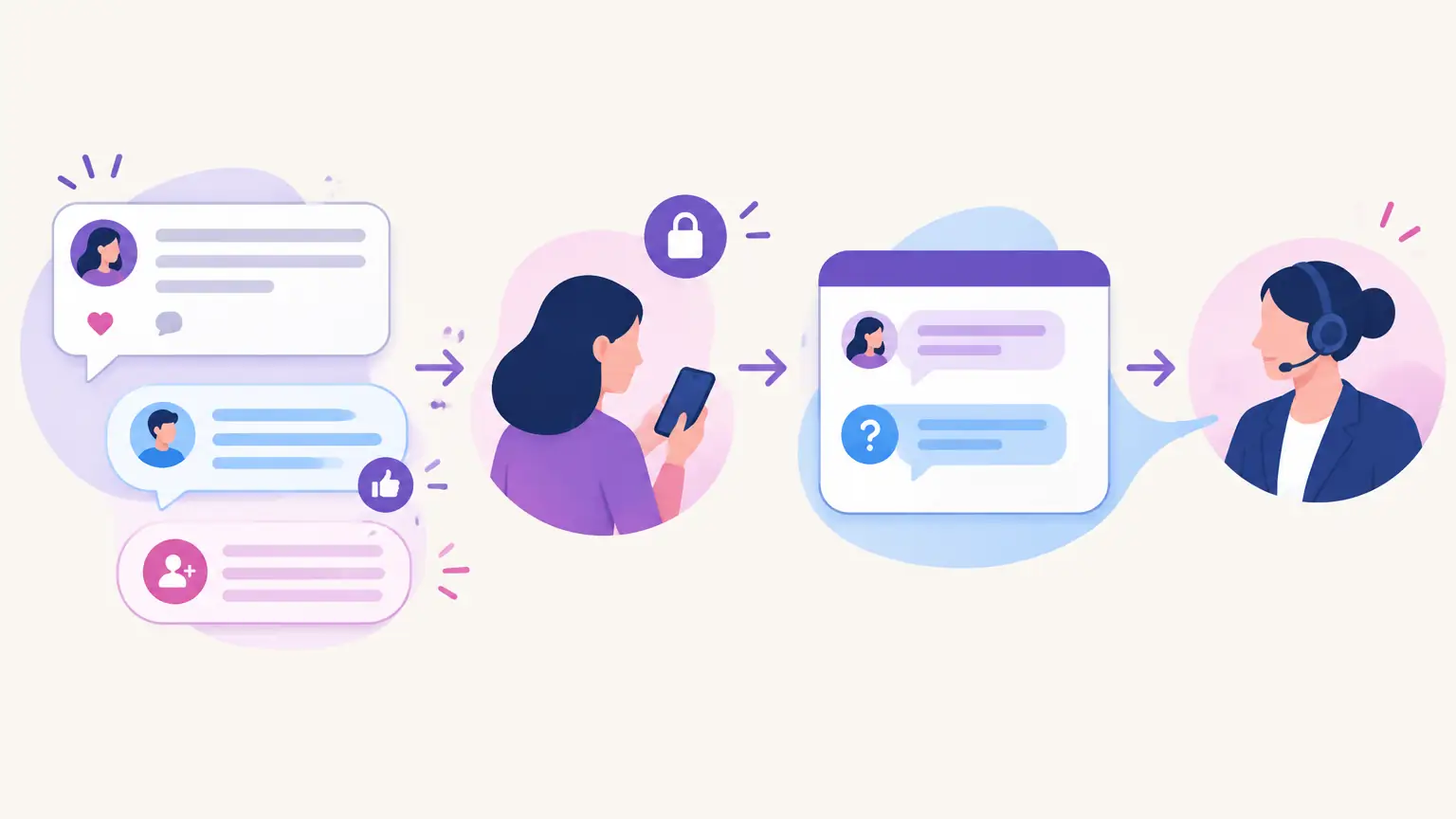
Answer publicly first when the answer helps other readers. Move to a private conversation only when the next step needs personal details, like a quote, booking or account issue, and let the customer choose to do it. Ask only for what that step needs. A public comment is not consent to promotional messaging, and not every platform or account supports automated private replies.
Public first, when it helps
Many questions in comments are ones other people are silently wondering about: "Is parking free?", "Do you ship to Kingston?", "Is this gluten free?" Answering them publicly helps everyone who reads the thread and shows you respond. Pushing every question into private messages hides useful information and can look like you are avoiding the question.
When private makes sense
| Situation | Public reply | Private step? |
|---|---|---|
| General question with a factual answer | Answer it | No |
| Quote that needs address or measurements | Explain factors publicly | Invite, customer chooses |
| Booking for a specific date | Share how booking works | Invite, or link to booking tool |
| Complaint about an order | Acknowledge publicly, briefly | Yes, to resolve details |
| Anything involving health, legal, financial or account details | Ask them not to post details | Yes, through an approved channel |
How to invite rather than push
A good invitation is specific and optional: "Happy to put together a quote. If you'd like, send us a message with your neighborhood and the size of the space." It explains why the private step is useful and what will be asked. Compare that with "DM us!", which gives no reason and no expectation.
After the invitation, the customer decides. If they do not message you, the public answer still stands.
Ask for the minimum
In the private conversation, request only what the next step requires. For a cleaning quote that might be general area, property size and preferred timing. It is not full address, date of birth or payment details. Collect more later, in the proper tool, once the customer moves forward.
Hypothetical example: a Florida pool service
A fictional pool service posts a before-and-after photo. A commenter asks, "How much for weekly service?" The public reply explains that pricing depends on pool size and equipment and that they serve several listed neighborhoods. It then adds: "If you'd like a quote, message us your neighborhood and pool size and we'll reply within a business day." The commenter sends a message. The reply asks one clarifying question about equipment and confirms a team member will follow up. A person then prepares the quote from the company's approved pricing and offers to schedule a visit through their normal booking link. The assistant collects intake details only; it does not calculate a price. Nothing in that thread becomes a newsletter signup. For reference, see FTC: CAN-SPAM Act compliance guide for business.
Consent is separate
Replying to someone's question in a private message is a service conversation. Adding them to promotional campaigns is a different decision that should be based on a clear, separate choice they make. Our guide to capturing contact details without assuming consent walks through how to keep those separate.
Platform capabilities vary
Some platforms offer tools for replying privately to a comment, and some businesses use automation for this. Those features have platform-specific rules, time limits and eligibility requirements that change over time and differ by account type. Check the platform's current official documentation before designing a workflow around them, and do not assume an automated private reply is available or appropriate everywhere. Rithm's starter plan does not include automated social DMs; those are scoped separately.
Pre-reply checklist
- Would the answer help other readers? Answer publicly.
- Does the next step need personal details? Invite privately and say why.
- Is the invitation optional and specific?
- Am I asking only for what this step needs?
- Have I avoided implying the person signed up for marketing?
Frequently asked questions
Is it rude to reply "check your DMs"?
Sending an unrequested private message can feel intrusive. An invitation the customer accepts is usually better received.
What if the comment is a complaint?
Acknowledge it publicly in a sentence, then offer to resolve details privately. Avoid debating specifics in the thread.
Can I save commenters as leads?
Only people who actually make an inquiry should be recorded as leads, and their marketing permission should be tracked separately.
Next step
Review your last few comment threads and note where a public answer would have helped more. For a structured process, see our comment-to-conversion service or the intent classification guide.
Sources and further reading
- FTC: CAN-SPAM Act compliance guide for business, on the difference between commercial and relationship messages by email in the United States.
Editorial note: this planning guide was drafted with AI assistance for Rithm Digital and created on September 25, 2026. Examples are hypothetical. It is general marketing-operations guidance, not legal, medical, tax or financial advice. Prices refer only to Rithm's published Small Business Launch & Growth offer.
You might also like
Discover more content related to this topic
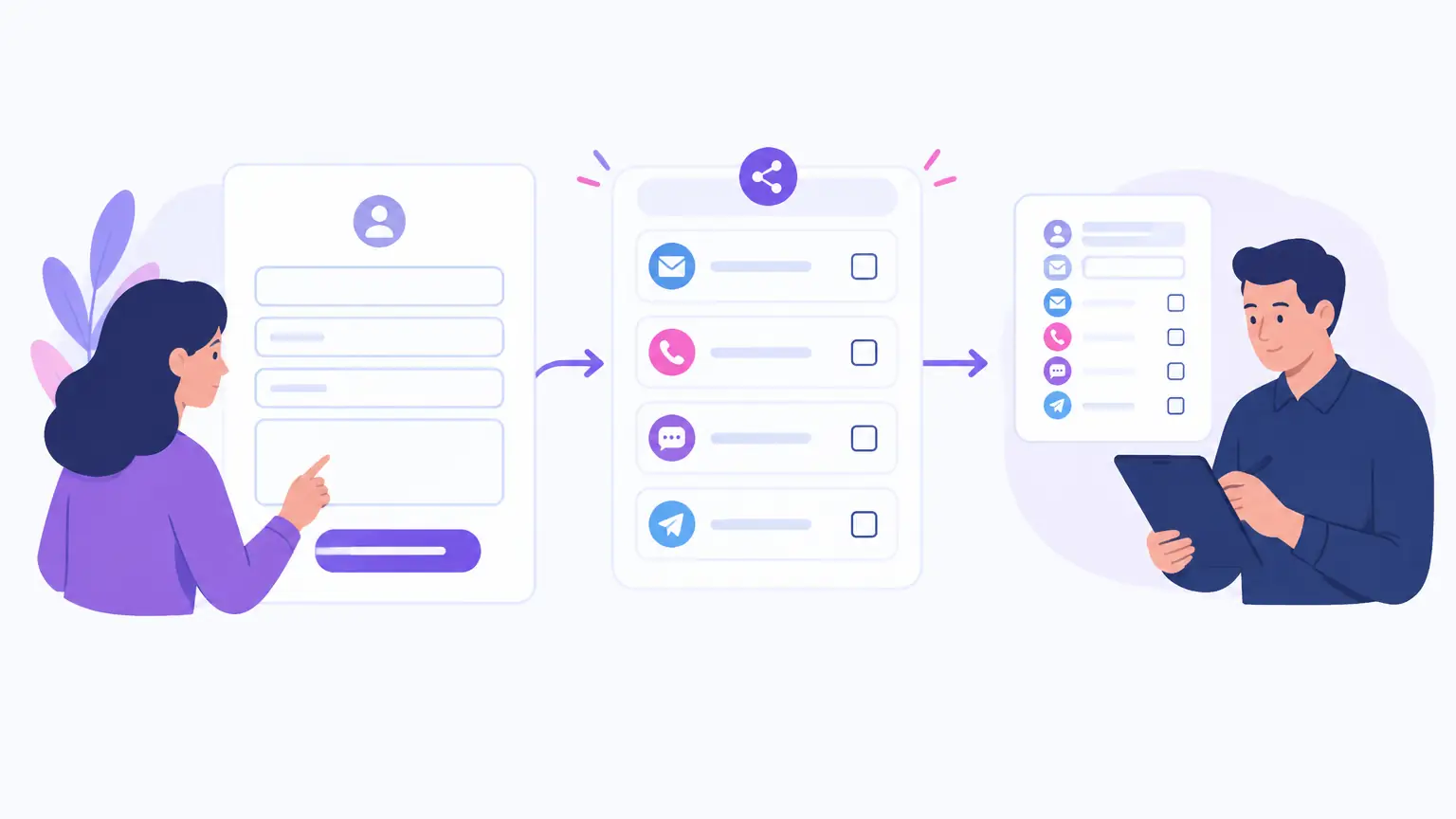
Capture Contact Details Without Treating Every Chat as Marketing Consent
Keep a service inquiry separate from optional ongoing promotion, with clear channel expectations, records and an easy way to withdraw.
Classify Buying Intent in Social Comments Without Guessing
Separate curiosity, product questions, objections and clear purchase intent, with an explicit unknown class and example replies.