

Capture Contact Details Without Treating Every Chat as Marketing Consent
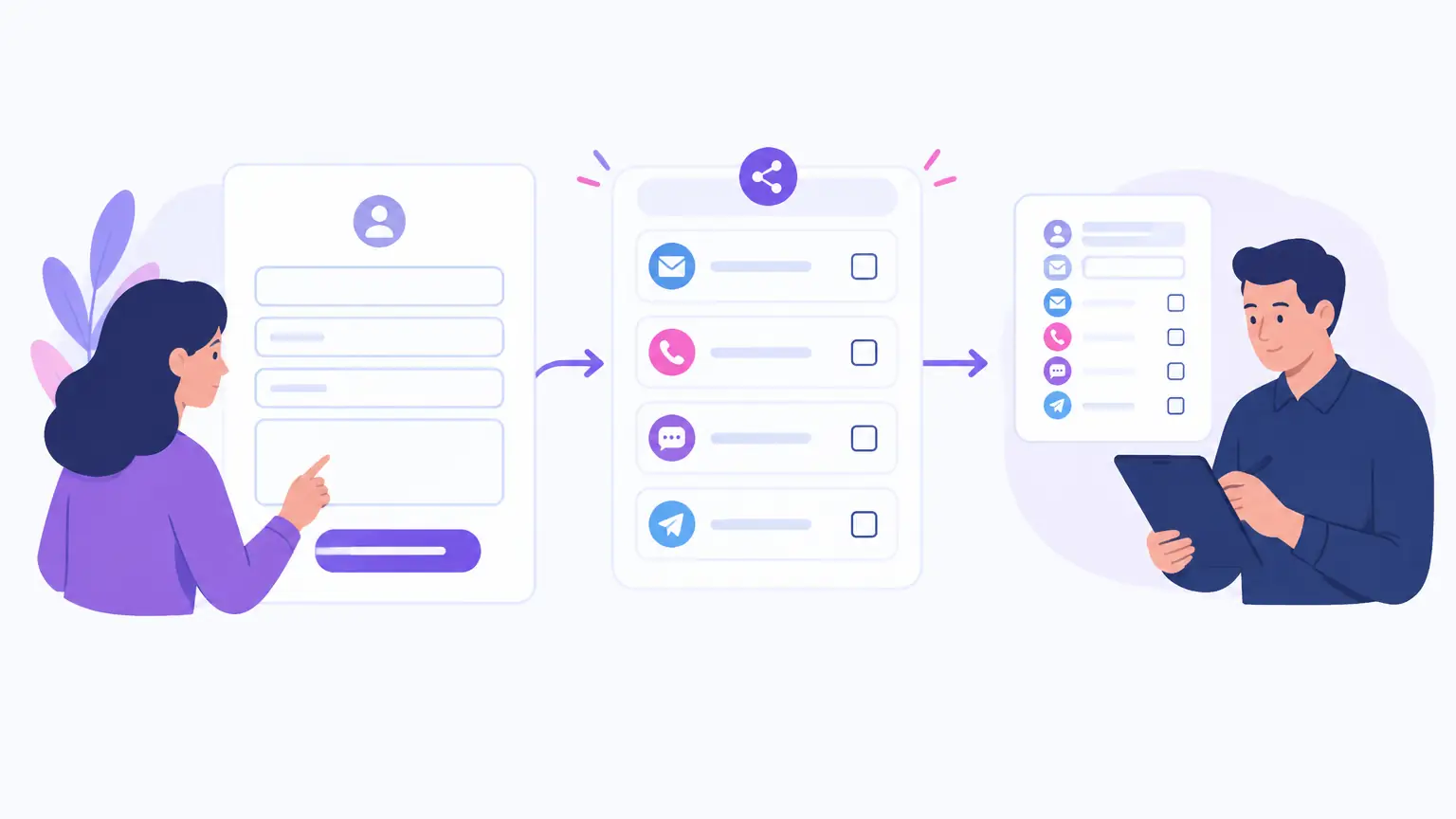
When someone shares contact details to ask a question, use them to answer that question. Ask separately, with a clear optional choice, if they also want ongoing promotional messages. Tell them which channel you will use, record what they chose and when, and make withdrawing easy. Requirements differ by country and channel, so have your specific setup reviewed rather than relying on one checkbox.
Two different purposes
A person who fills in a quote form wants a quote. A person who signs up for a monthly offers email wants offers. Both involve an email address, but the purpose is different. Treating every inquiry as a newsletter signup confuses customers, weakens trust and can create legal risk depending on where you and your customers are.
Keep two separate records:
| Purpose | Example | How it is captured | What you may send |
|---|---|---|---|
| Service inquiry | Quote request, booking question | Inquiry form or conversation | Replies and follow-ups about that request |
| Ongoing promotion | Newsletter, offers, event announcements | Separate optional choice | Promotional content, with easy opt-out |
Designing the form
- Label the contact fields with how they will be used: "We'll use this to reply to your request."
- Put any marketing choice in a separate, unticked checkbox with plain wording such as "Also send me occasional offers and news by email."
- Do not make the marketing choice a condition of getting a reply.
- Link to your privacy information near the submit button.
- State the channel. If you might text as well as email, say so in the inquiry wording and let people choose.
Rithm's own lead capture and consent guide covers more design details.
Recording the choice
For each contact, record whether they opted in to promotion, the wording they saw, the date and the source. If they later opt out, record that too and make sure every tool that sends promotional messages respects it. This is where a single source of truth in your CRM matters; our guide to routing leads discusses where those records live.
Hypothetical example: a yoga studio
A fictional studio's trial-class form asks for name, email and preferred class time. Below it is an unticked box: "Send me the monthly schedule and occasional workshop announcements." Sam books a trial and leaves the box unticked. Sam receives a booking confirmation and a reminder the day before, both about the trial class. Sam does not receive the monthly schedule. A month later Sam signs up for the schedule on the website, and the CRM records that separate choice with its date.
Conversations count too
The same logic applies to chat and social messages. A person who asks a question in a DM has started a service conversation. That does not mean they agreed to receive promotions on that channel. To offer updates, ask as a separate optional question and record the answer.
Channel expectations
Different channels carry different expectations and rules. Email, SMS and messaging apps each have their own legal frameworks and platform policies, and those vary by country. For example, in the United States the FTC's CAN-SPAM guidance classifies email by its primary purpose, while messaging platforms such as WhatsApp publish their own opt-in and opt-out policies. Treat these as starting points and get advice for your situation. Source: FTC: CAN-SPAM Act compliance guide for business.
Checklist
- Inquiry wording says how contact details will be used.
- Marketing choice is separate, optional and unticked.
- The choice, wording, date and source are recorded.
- Opt-out is easy and honored across all tools.
- Follow-ups about an inquiry stay about that inquiry.
Frequently asked questions
Can I send a follow-up about the quote they asked for?
Messages about the request itself are generally treated differently from promotions, but classification depends on content and jurisdiction. Keep them clearly about the request. See our quote follow-up guide.
Is a pre-ticked box okay?
It is best avoided. A choice the person actively makes is clearer evidence of what they wanted.
Does this make us compliant?
No single form design guarantees compliance. It is a practical workflow that should be reviewed against the laws and platform rules that apply to you.
Next step
Review your inquiry forms and remove any marketing assumption. Discuss your lead capture with Rithm. Source: W3C WAI: Forms tutorial.
Sources and further reading
- FTC: CAN-SPAM Act compliance guide for business, on commercial versus transactional or relationship email in the United States.
- WhatsApp Business Messaging Policy, which describes opt-in and opt-out expectations on that platform.
- W3C WAI: Forms tutorial, on clear labels and instructions.
Editorial note: this planning guide was drafted with AI assistance for Rithm Digital and created on September 25, 2026. Examples are hypothetical. It is general marketing-operations guidance, not legal, medical, tax or financial advice. Prices refer only to Rithm's published Small Business Launch & Growth offer.
You might also like
Discover more content related to this topic
Follow Up on a Quote Request Without Sending a Newsletter
An acknowledgment, one helpful request-specific follow-up and a respectful close, kept separate from promotional email.
UTM Tracking Without Personal Data in URLs
A naming convention and example URLs that keep names, emails, phone numbers and customer tokens out of campaign parameters.