

Choose a Call to Action for Each Funnel Stage
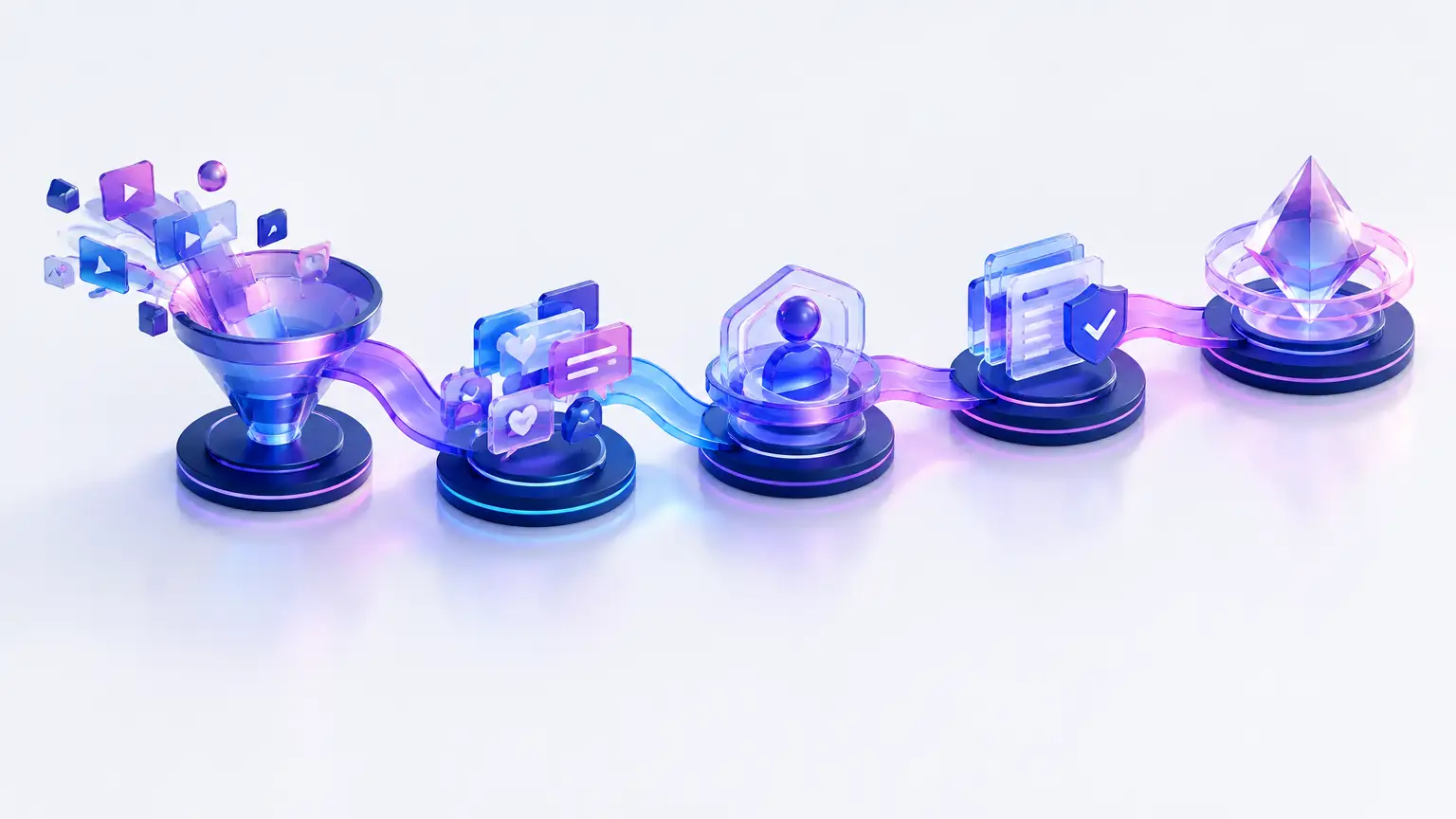
Match each call to action to what the visitor is ready to do. Learning-stage visitors need "Read," "See" or "Compare." Evaluating visitors need "View pricing" or "Check availability." Ready visitors need "Request a quote" or "Book a consultation." Be precise about what happens next, and never label a request as if it were a confirmed booking or a completed purchase.
Why the verb matters
A button that says "Get started" could mean anything: a free trial, a sales call, a payment page. Vague calls to action make visitors hesitate because they cannot predict the result. Precise verbs set honest expectations and reduce surprises later.
Stage-to-CTA table
| Stage | Visitor mindset | Good verbs | Example CTA | Avoid |
|---|---|---|---|---|
| Learning | "What is this? Does it apply to me?" | Read, See, Learn, Compare | "See how the process works" | "Buy now" |
| Evaluating | "Is this right for me? What does it cost?" | View, Check, Compare, Download | "View pricing and what's included" | "Claim your spot" (fake scarcity) |
| Requesting | "I want to talk or get a price." | Request, Ask, Book a call | "Request a quote" | "Confirm booking" (if it's only a request) |
| Confirmed | "It's arranged." | (Confirmation message, not a button) | "Your consultation is booked for Tuesday at 10 a.m." | Showing this before it is true |
Request versus confirmation
Many funnels blur the line between asking and having. "Book now" on a form that only sends a request to staff sets the wrong expectation. If a person must still confirm the time, the button should say "Request a time" and the success message should say "We received your request and will confirm by email." A true booking CTA belongs only on a tool that actually reserves a slot. For reference, see W3C WAI: Forms tutorial.
A click is not a purchase
Measurement has the same trap. A click on "Buy" is not a sale, and a form submission is not a customer. Track each stage separately, as described in measuring an inquiry separately from a booking or sale. That keeps your reports honest about what the calls to action actually achieved.
Hypothetical example: a physical therapy clinic's website
A fictional clinic uses these calls to action:
- On a blog post about desk posture: "Read our guide to choosing a physical therapist."
- On the services page: "See which insurance plans we accept."
- On the contact page: "Request an appointment." The confirmation says the front desk will call to schedule through the clinic's own system.
The clinic never uses "Book instantly," because appointments are scheduled by staff. Patient details are handled by the clinic's approved scheduling process, not a generic marketing form; see medical practice marketing without patient intake.
One primary CTA per page
Each page should have one main action that fits its stage. Secondary links are fine, but they should look secondary. A page with "Call now," "Book," "Subscribe," "Download" and "Chat" all competing makes none of them clear.
CTA checklist
- The verb describes exactly what happens next.
- Requests are labeled as requests.
- The success message matches the CTA.
- No fake urgency or scarcity.
- One primary CTA per page.
- Each stage is tracked separately.
Frequently asked questions
Is "Contact us" a bad CTA?
It is not bad, but it is vague. "Ask a question" or "Request a quote" tells visitors more.
Should the CTA mention price?
If a price is published, mentioning it near the CTA can reduce uncertainty. See the landing page or full website guide for page context.
How many CTAs should an article have?
Usually one relevant next step at the end, plus natural links in the text.
Next step
List the CTAs on your site and label each with its funnel stage. If any promise more than they deliver, rewrite them. For funnel design help, see our funnel strategy service.
Sources and further reading
- W3C WAI: Forms tutorial, on clear buttons and notifications after submission.
Editorial note: this planning guide was drafted with AI assistance for Rithm Digital and created on September 25, 2026. Examples are hypothetical. It is general marketing-operations guidance, not legal, medical, tax or financial advice. Prices refer only to Rithm's published Small Business Launch & Growth offer.
You might also like
Discover more content related to this topic
Landing Page or Full Website: Which Does Your Campaign Need?
A decision framework based on visitor intent and the assets you already have.
Measure an Inquiry Separately From a Booking or Sale
Define event stages, deduplicate and rely on staff confirmation, with a hypothetical event dictionary.