

Analytics Service: Tracking Which Marketing Produces Inquiries
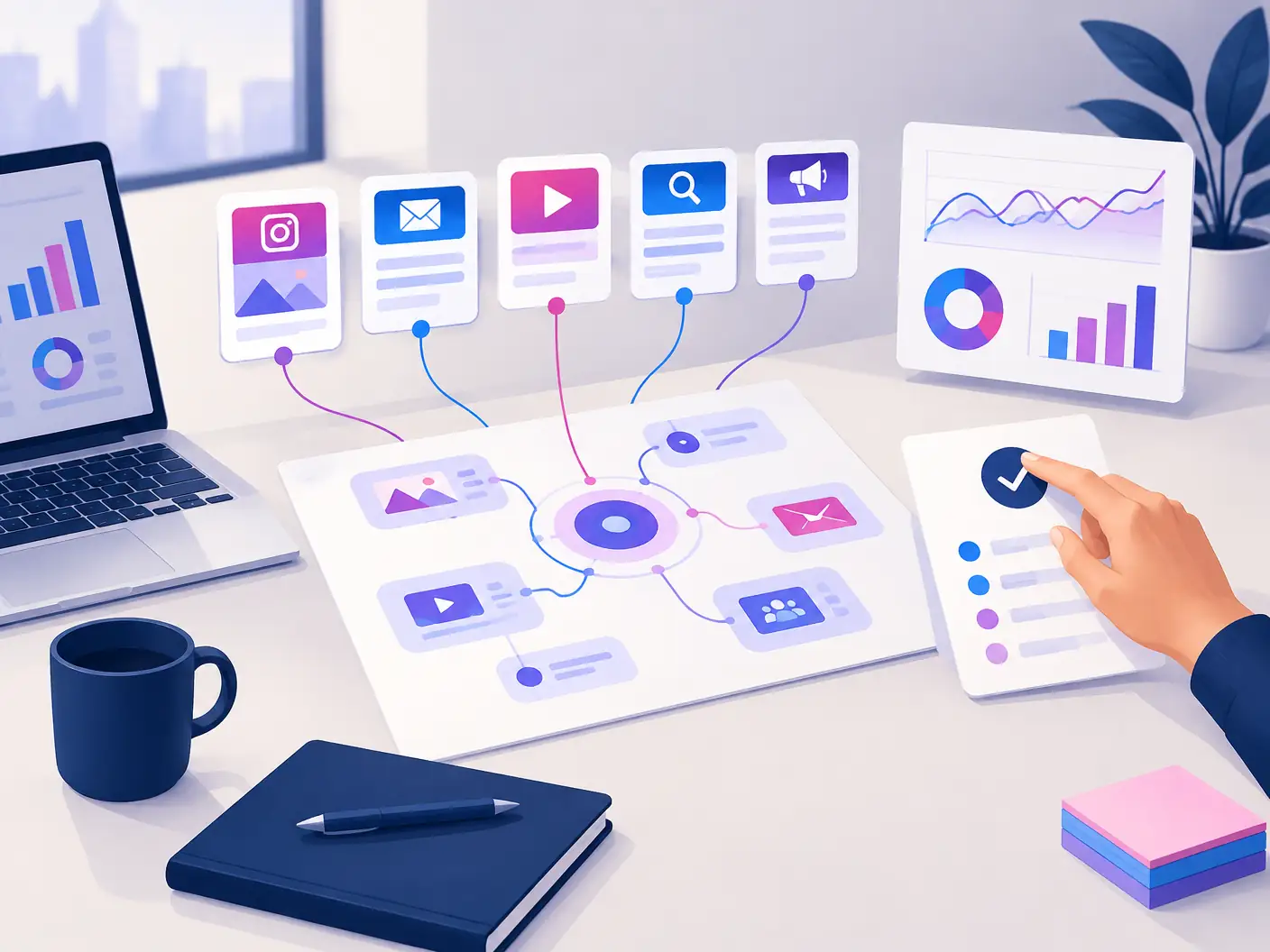
Rithm's analytics service sets up tracking that answers one practical question: which marketing actually produces inquiries and customers. We define a short list of events, connect them to your website and forms, keep personal information out of reports, and explain results in plain language. Small numbers are reported with honest uncertainty rather than dramatic conclusions.
Why most small-business analytics are confusing
Default dashboards show visits, bounce rates and dozens of charts that rarely connect to revenue. The useful measurements are simpler: how many people inquired, from where, and how many became customers. Rithm's analytics service builds around those measurements.
A starter event plan
| Event | Meaning | Confirmed by |
|---|---|---|
| Inquiry submitted | Form sent successfully | Website |
| Call started | Tap on a phone link | Website |
| Qualified inquiry | A real prospect, not spam | Staff |
| Booked or sold | Became a customer | Staff or CRM |
Google Analytics 4 records interactions as events; its help article on events in Google Analytics explains how they are collected and named.
Privacy rules we apply
- No personal details in URLs. Names, emails and phone numbers never go into tracking parameters.
- Minimal collection. Track actions, not identities, unless a person has a clear reason and consent.
- Redacted private pages. Account and admin areas are not reported with identifiers.
- Consent where required. Cookie and tracking notices match the regions you serve.
Hypothetical example: a dental office marketing team
A fictional dental office runs social posts and a search campaign. Their analytics only show page visits. The new setup counts appointment request submissions and phone taps on public marketing pages, tags each campaign with plain labels, and asks the front desk to mark which requests became new patient bookings in the practice's approved system. Patient details stay in that system, not in marketing analytics. Monthly reports compare campaigns by requests, not clicks.
Measurement checklist
- A written list of the few events that matter.
- Test submissions recorded correctly.
- Campaign links use consistent naming.
- A simple way for staff to confirm real customers.
- A monthly review date.
Our guide on measuring an inquiry separately from a sale explains why those stages should stay apart.
Common tracking problems we fix
Several issues show up again and again. Forms that count a visit to the thank-you page twice, inflating inquiries. Campaign links tagged differently by different people, so one campaign appears as three. Test submissions from staff left in the data. Phone taps counted as calls even when nobody spoke. Spam submissions mixed with real prospects. Each one makes reports misleading. Fixing them often matters more than adding new tracking, because decisions are only as good as the numbers behind them.
Reading a monthly report
A useful report starts with what happened, such as inquiries by source, then notes what is uncertain, and ends with one or two recommendations. It avoids treating small month-to-month changes as proof of success or failure. When a decision depends on more data, the report says so.
Frequently asked questions
Do I need Google Analytics?
Not necessarily. Any privacy-respecting tool that records your key events can work. The plan matters more than the tool.
How soon can I trust the numbers?
After testing that events fire correctly and collecting enough activity. With low volume, look at trends over several months.
Can you track phone calls?
Website phone taps can be counted. Full call tracking uses separate tools with their own costs, approved before setup.
Next step
Write down what a successful month looks like for you and set up your measurement with Rithm. It pairs well with our SEO strategy work.
Sources and further reading
- Google: Events in Google Analytics.
- Google: URL builders and campaign parameters, for consistent campaign tagging.
Editorial note: this planning guide was drafted with AI assistance for Rithm Digital and created on September 25, 2026. Examples are hypothetical. It is general marketing-operations guidance, not legal, medical, tax or financial advice. Prices refer only to Rithm's published Small Business Launch & Growth offer.
You might also like
Discover more content related to this topic
Measure an Inquiry Separately From a Booking or Sale
Define event stages, deduplicate and rely on staff confirmation, with a hypothetical event dictionary.
UTM Tracking Without Personal Data in URLs
A naming convention and example URLs that keep names, emails, phone numbers and customer tokens out of campaign parameters.