

Internal Links for Service Businesses: Connect Questions to Next Steps
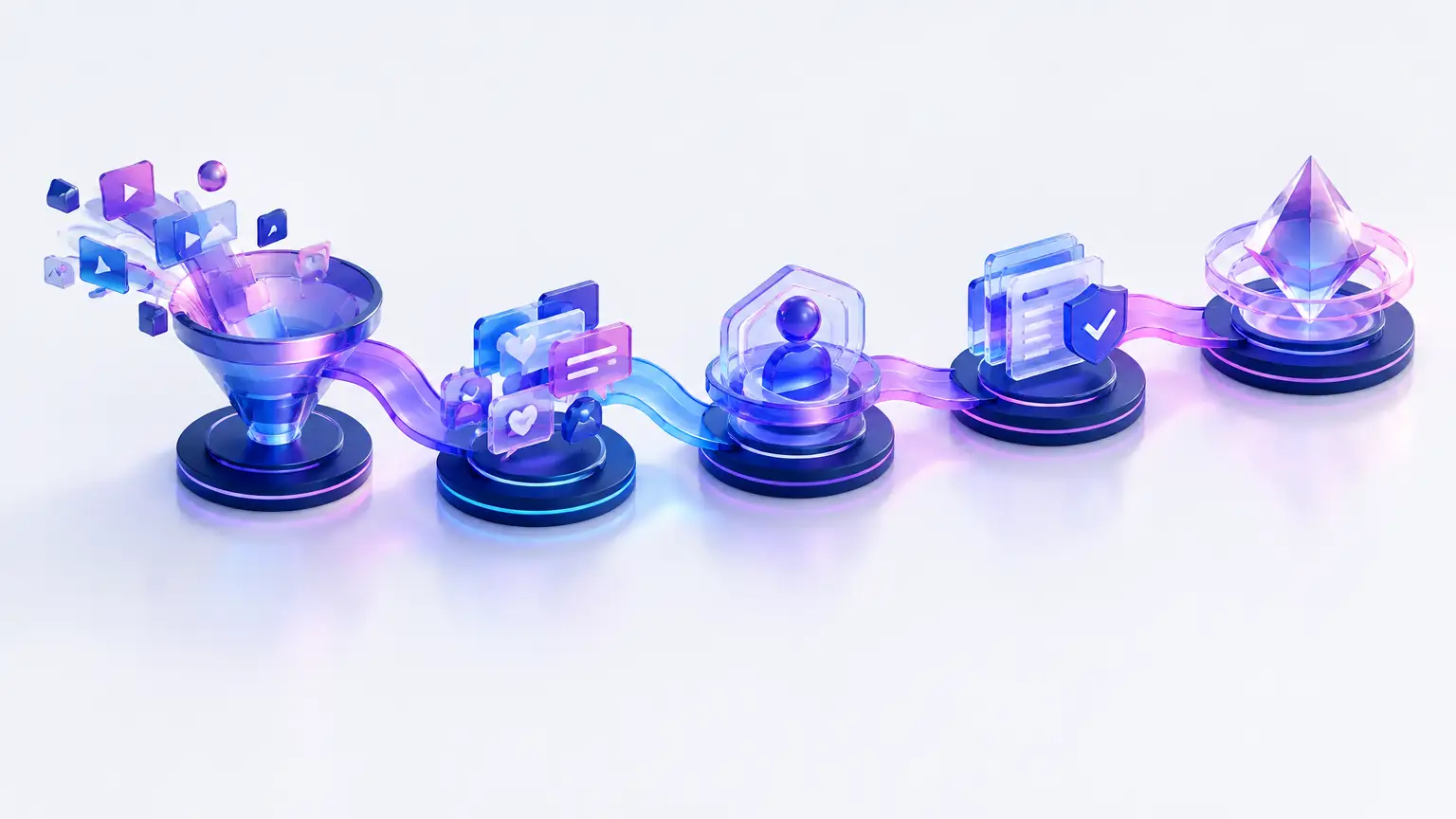
Internal links should help a reader take the next logical step: from an article that answers a question, to a guide that goes deeper, to the service that solves the problem, to a way to inquire. Use normal links with descriptive anchor text that says where the link goes. There is no required number of links or keyword density; relevance is what matters.
What internal links do
Links between your own pages help people find related information and help search engines discover pages and understand how they relate. Google's guidance on crawlable links explains that links should be standard HTML links with an href, and that anchor text should be descriptive and relevant to the linked page.
The four-step link map
Think of your content as a path:
| Step | Page type | Reader question | Link to next step |
|---|---|---|---|
| 1 | Article | "Why is this happening? What are my options?" | Link to a guide that goes deeper |
| 2 | Guide | "How do I approach this properly?" | Link to the relevant service |
| 3 | Service page | "Can you do this for me?" | Link to the inquiry page |
| 4 | Inquiry | "How do I start?" | (Form or contact) |
Not every reader follows every step, and that is fine. Each link should make sense for someone at that point.
Hypothetical example: a pest control company
A fictional pest control business writes an article titled "Why ants come inside after heavy rain." Near the end, it links to a guide with the anchor "how to reduce entry points around your home." That guide links to the business's "general pest control service" page, which links to "request an inspection." Each anchor tells the reader exactly where they are going. None of them says "click here."
Writing good anchor text
| Weak anchor | Better anchor | Why |
|---|---|---|
| "Click here" | "request a quote for gutter cleaning" | Says what the page is |
| "Learn more" | "how our inspection process works" | Specific |
| "best plumber Orlando cheap" | "our plumbing services" | Natural, not stuffed |
| A whole paragraph linked | A short phrase | Easier to scan |
Practical rules
- Link when it genuinely helps the reader at that point in the text.
- Use normal links, not buttons that only work with scripts.
- Make sure every important page is linked from at least one other page.
- Update links when pages move or are removed; broken links frustrate readers.
- Avoid linking the same page repeatedly in one article.
Finding gaps
List your service pages and ask: which articles or guides link to each one? Pages with no incoming links are hard to find. Also list your articles and check that each links to at least one relevant service or next step. A page that exists but is not linked or indexed may need more investigation; see why a page can exist without being indexed.
Link map worksheet
- List every service page.
- For each, list articles and guides that relate to it.
- Add a descriptive link from each related article to the service.
- Check that each service page links to the inquiry page.
- Check that no link is broken.
How Rithm applies this
Our own blog articles link to related guides, services and a next step, like this article linking to our SEO strategy service. The funnel mapping guide uses the same thinking for customer journeys: every step should have a clear next step.
Frequently asked questions
How many internal links should a page have?
There is no set number. Include the links that help a reader. For a typical article, a few relevant links are usually enough.
Should I use exact-match keywords as anchors?
Use natural, descriptive phrases. Repeating the same keyword-stuffed anchor does not help readers.
Do links in the footer count?
Footer and menu links help discovery, but contextual links within content explain relationships better.
Next step
Complete the link map worksheet for your top three services. See also what makes a page useful to both search and AI answers.
Sources and further reading
Editorial note: this planning guide was drafted with AI assistance for Rithm Digital and created on September 25, 2026. Examples are hypothetical. It is general marketing-operations guidance, not legal, medical, tax or financial advice. Prices refer only to Rithm's published Small Business Launch & Growth offer.
You might also like
Discover more content related to this topic
SEO and AI Answers: What Makes a Business Page Useful to Both?
Clear original answers, crawlable pages, accurate business details and evidence matter. No special AI file or guaranteed inclusion.
Why a Page Can Exist Without Being Indexed
Reachable, rendered, eligible and selected are four different states. Here is how to check each one.