

AI Workflow or AI Agent: What Should a Small Business Build First?
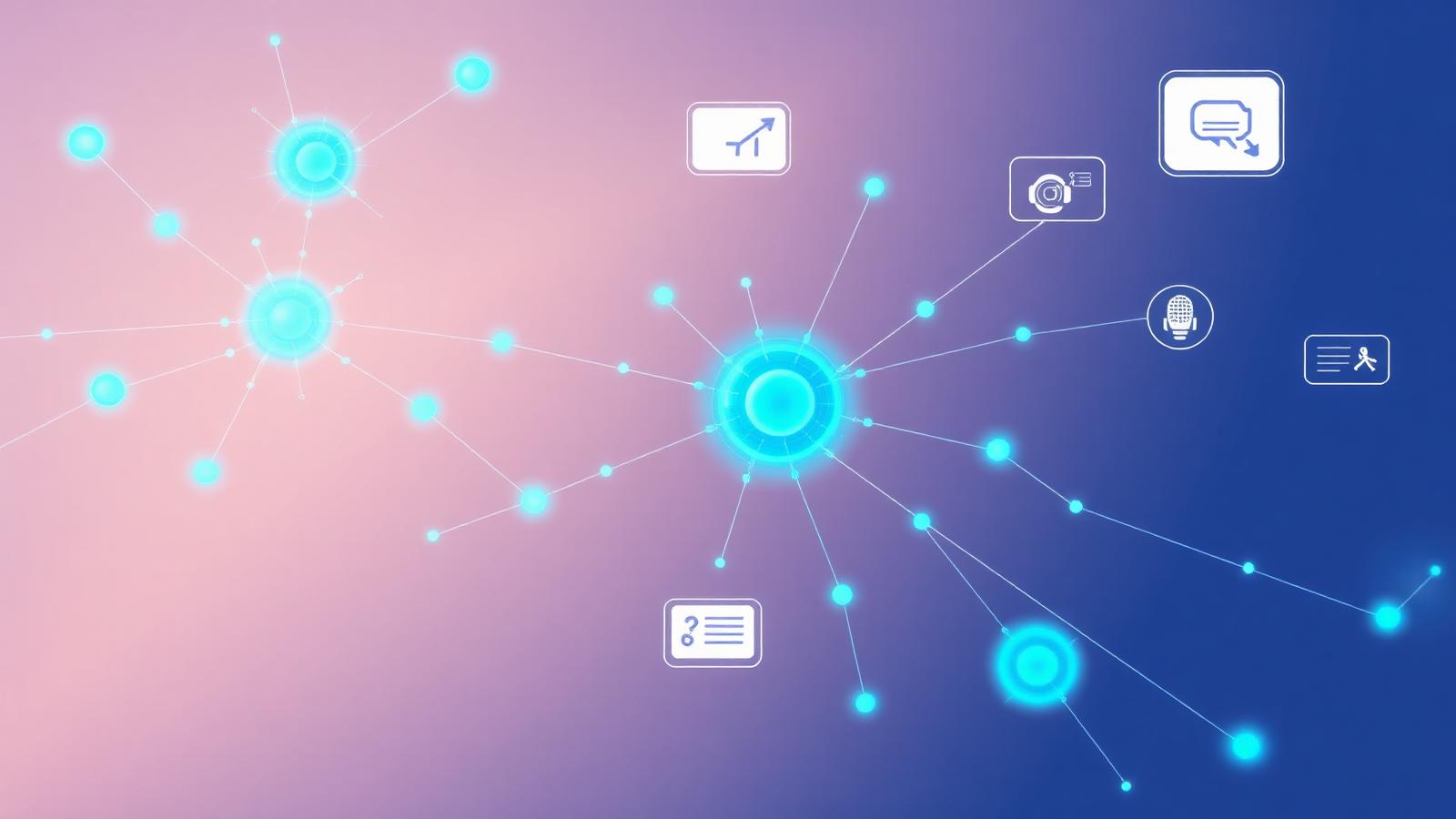
Most small businesses should build a defined AI workflow first. A workflow follows fixed steps you design, with a language model helping inside some steps. An agent lets the model decide which steps to take. Start with the workflow for predictable, repeated tasks, keep a human approval step for anything with money, commitments or sensitive data, and consider an agent only after the workflow is stable.
Two different designs
People use "AI agent" to describe almost anything that involves a language model, which makes buying decisions confusing. One useful distinction comes from Anthropic's engineering guide on building effective agents. In our paraphrase of that guide, a workflow follows steps a developer set in advance, while an agent lets the model decide which step or tool comes next. That is one vendor's framing, not a universal standard, but it is a practical way to think about risk.
In a workflow, you decide the order: receive inquiry, classify it, draft a reply, send to a person for approval, log in the CRM. The model might classify or draft, but it cannot skip the approval step.
In an agent, you give the model a goal and a set of tools, and it chooses what to do next. That flexibility is useful for open-ended problems, but it also means more ways to go wrong and more testing before you can trust it with customers.
A task-selection matrix
Score each candidate task on two questions: how predictable are the inputs, and how costly is a wrong action?
| Low cost of error | High cost of error | |
|---|---|---|
| Predictable inputs | Automate as a workflow (for example, inquiry confirmation emails) | Workflow with human approval (for example, quote follow-ups that mention price) |
| Unpredictable inputs | Workflow that drafts and routes to a person (for example, classifying unusual DMs) | Keep human-led; consider an agent only with strong limits and review |
Most early wins sit in the top-left box. They are boring on purpose.
Where the human approval boundary goes
Draw a line at any action that changes what the business has promised. Typical examples:
- Quoting or discounting a price that is not already published.
- Confirming availability, a booking or a delivery date.
- Responding to a complaint or refund request.
- Handling health, legal, financial or children's information.
Above the line, the system may draft. Below it, a person decides. Our guide on where AI should stop and your sales team should take over goes deeper into writing those handoff rules.
Hypothetical example: a boutique fitness studio
A studio owner wants "an AI agent that handles all our leads." After scoring tasks, the list looks different:
- Confirming a trial-class request and sending the schedule link: predictable, low risk. Workflow.
- Answering "do you have parking?" from an approved fact list: predictable, low risk. Workflow with a draft reply.
- Handling a member who wants to freeze a contract for a medical reason: unpredictable, higher risk. Route to the manager.
- Deciding which lapsed members to contact with a promotion: involves marketing permission. A person approves the list.
Nothing on that list requires the model to choose its own steps. The studio gets most of the value from a workflow, and it can revisit agents once it has a clean record of real questions.
Signs you might be ready for an agent
- The workflow has run reliably, and you have logs of the questions it could not handle.
- You can describe the tools the agent may use and, more importantly, the ones it may not.
- Someone owns reviewing its actions and has time to do it.
- You have tested it with made-up data, following a plan like our pre-launch test grid.
If those are not true yet, an agent will mostly add uncertainty. Our AI agent development work is scoped separately from starter packages for this reason.
Frequently asked questions
Is a chatbot a workflow or an agent?
It depends on how it is built. A chatbot that answers from approved facts and hands off to a person on fixed triggers behaves like a workflow. One that decides on its own to look up records or take actions behaves more like an agent.
Are workflows less "AI" than agents?
No. Both can use the same language models. The difference is who controls the sequence of steps, which matters most for reliability and accountability.
Can I move from a workflow to an agent later?
Yes, and it is usually easier that way. The workflow gives you tested steps, clean data and a list of edge cases that an agent design will need.
Next step
List five repetitive tasks, place each in the matrix and pick one top-left task to pilot. The 30-day pilot plan shows how to test it safely.
Sources and further reading
- Anthropic: Building effective agents, source of the workflow and agent distinction quoted above.
Editorial note: this planning guide was drafted with AI assistance for Rithm Digital and created on September 25, 2026. Examples are hypothetical. It is general marketing-operations guidance, not legal, medical, tax or financial advice. Prices refer only to Rithm's published Small Business Launch & Growth offer.
You might also like
Discover more content related to this topic

Where AI Should Stop and Your Sales Team Should Take Over
A handoff matrix for uncertainty, complaints, price exceptions, eligibility and sensitive data, plus the context to pass along without overcollecting.
A 30-Day Pilot Plan for an AI Marketing Workflow
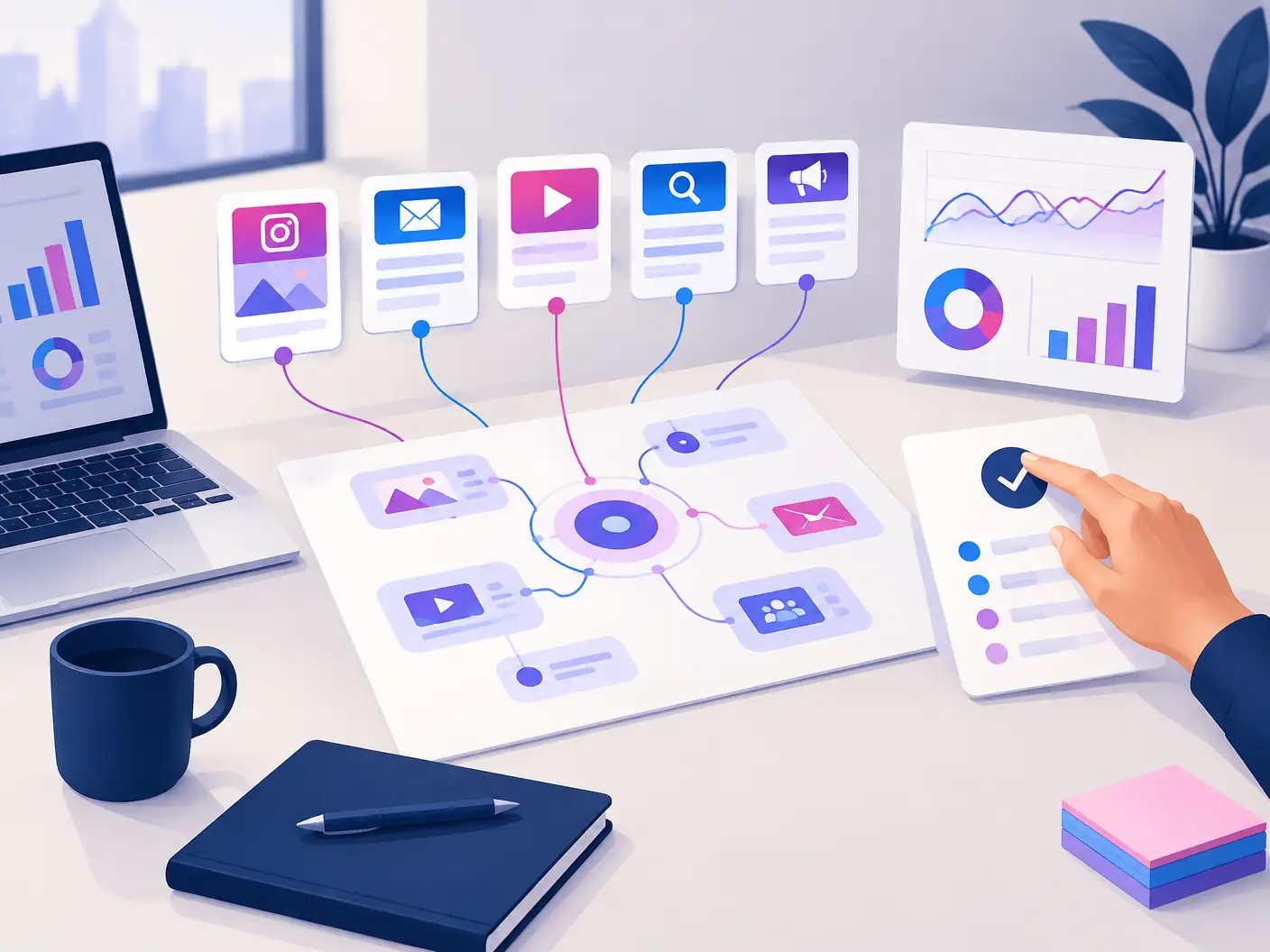
A proposed test schedule with readiness checks, a small controlled trial, stop rules and review criteria. A planning aid, not a promised result.